What Is Implant Removal? Dental implants are a reliable long-term solution for tooth replacement — but they are not entirely without risk. In certain circumstances, a failed or problematic implant must be surgically removed to protect the patient's oral health. At Dentaline Dental Clinic in Nicosia, North Cyprus, implant removal is performed by an experienced specialist team in a fully sterile clinical environment, with patient comfort and safety at the forefront of every procedure.
Who May Need Implant Removal? Not every implant works as intended. The following conditions may indicate that removal is necessary:
Failed osseointegration — the implant has not fused properly with the jawbone Periimplantitis — chronic infection and progressive bone loss around the implant Fractured or mechanically damaged implant body or abutment Implants placed at incorrect angles or in areas with insufficient bone volume Persistent pain, swelling, or bleeding that does not resolve with conservative treatment Complications from an implant placed at another clinic
The decision to remove an implant is never taken lightly. A thorough clinical examination, supported by digital radiography, is carried out before any surgical plan is made.
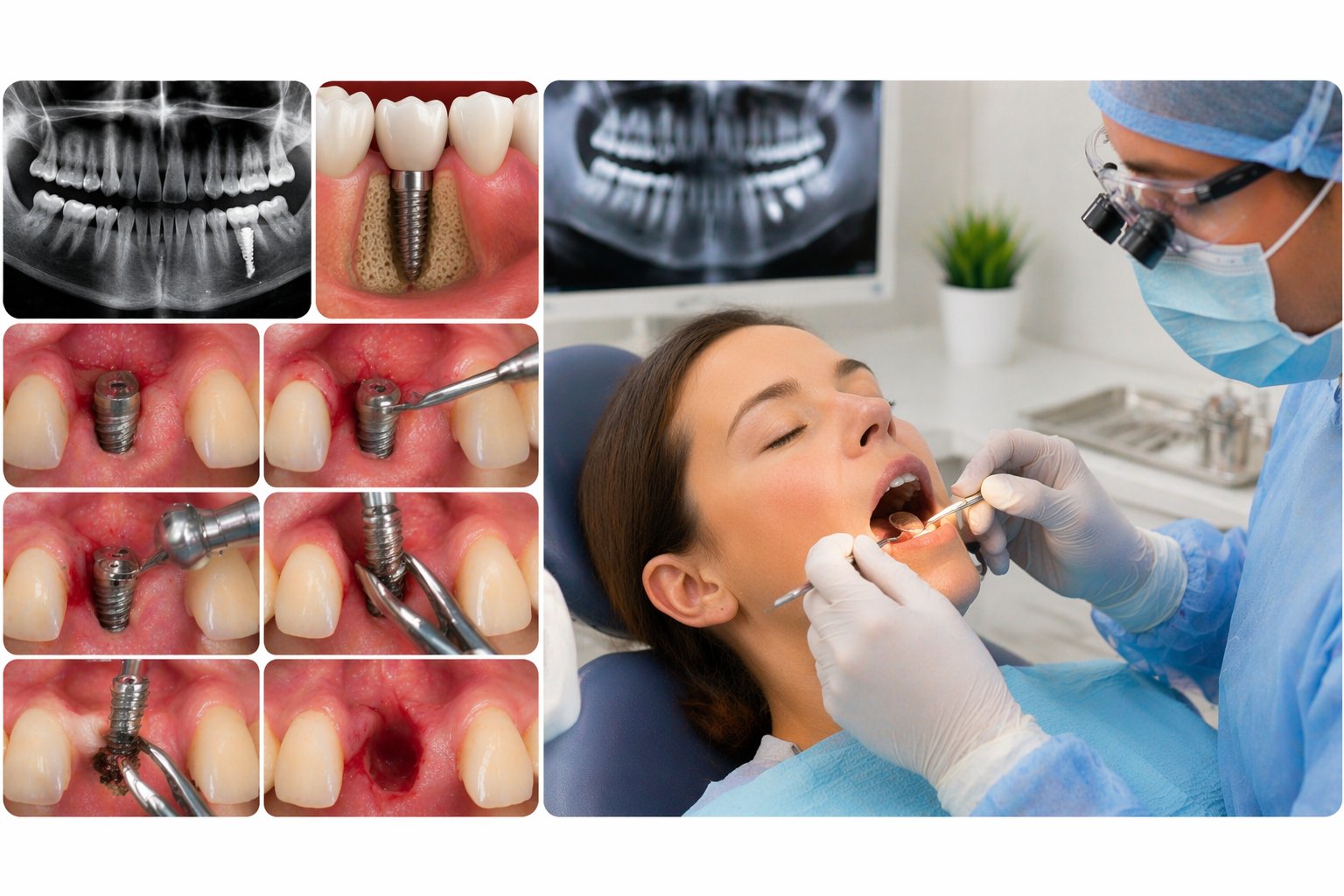
The Implant Removal Process 1. Assessment and Planning Your appointment begins with a detailed evaluation using panoramic X-rays or 3D cone beam computed tomography (CBCT). These images allow the surgeon to assess the implant's exact position, the state of the surrounding bone, and any factors that may influence the procedure. All imaging is analysed in our in-house digital laboratory, enabling precise, evidence-based treatment planning.
3. Surgical Removal The procedure is carried out under local anaesthesia; sedation options are available for patients who require additional comfort. Our specialist surgeon carefully removes the implant and, where necessary, any infected or compromised tissue in the surrounding area. Strict sterile protocols are maintained throughout. Most patients are surprised by how straightforward the experience is.
3. Healing and Follow-Up After removal, the site is allowed sufficient time to heal. Depending on bone condition, a bone graft may be recommended to rebuild the area in preparation for a future implant or alternative restoration. Follow-up appointments ensure healing progresses as expected.
What Comes Next?
A new implant can be placed once adequate healing has occurred Alternative restorations — such as a dental bridge or removable prosthesis — can be explored If bone volume is insufficient, guided bone regeneration can prepare the site for future treatment
Why Choose Dentaline in Nicosia, North Cyprus?
Specialist Surgical Team: Complex implant procedures require experienced hands. Our surgeons have extensive clinical backgrounds in implantology and oral surgery. In-House Digital Laboratory: From 3D imaging to treatment planning, every step is managed within our clinic — reducing delays and improving accuracy. International Infection Control Standards: Our sterile working environment adheres to internationally recognised protocols, ensuring a safe experience for every patient. North Cyprus Dental Tourism: Dentaline is situated in central Nicosia, making it accessible for both local patients and international visitors travelling to North Cyprus for dental care. Honest, Clear Communication: We explain every stage of your treatment in plain language — no unnecessary jargon, no surprises.
Book a Consultation If you are experiencing discomfort around an implant, or are concerned about a procedure carried out elsewhere, do not wait for symptoms to worsen. Contact Dentaline Dental Clinic in Nicosia today to arrange an assessment. Our team will evaluate your situation thoroughly and guide you toward the most appropriate course of treatment.