What Is a Cyst Operation? Jaw and oral cysts are enclosed sac-like structures filled with fluid or semi-solid material that can develop within the jawbone or soft tissues of the mouth. Because they often grow silently without causing noticeable discomfort, they may go undetected for months or even years. Left untreated, however, they can erode surrounding bone, displace adjacent teeth, and in some cases affect nearby nerves. At Dentaline Dental Clinic in Nicosia, North Cyprus, our cyst surgery service aims to diagnose and remove these lesions safely and effectively before complications arise.
Who Needs a Cyst Operation? Surgical intervention is typically recommended when imaging reveals a cyst in the jaw or oral cavity, particularly in the following scenarios:
Follicular (dentigerous) cysts forming around impacted or unerupted teeth Radicular (periapical) cysts developing at the root tip of a non-vital tooth Recurring oral infections or unexplained jaw pain without an obvious dental cause Radiolucent lesions detected on panoramic X-ray or CBCT imaging Signs of tooth displacement or root resorption in neighbouring teeth
Every treatment plan is tailored individually by our oral and maxillofacial surgeon, taking into account the cyst type, size, location, and the patient's overall health profile.
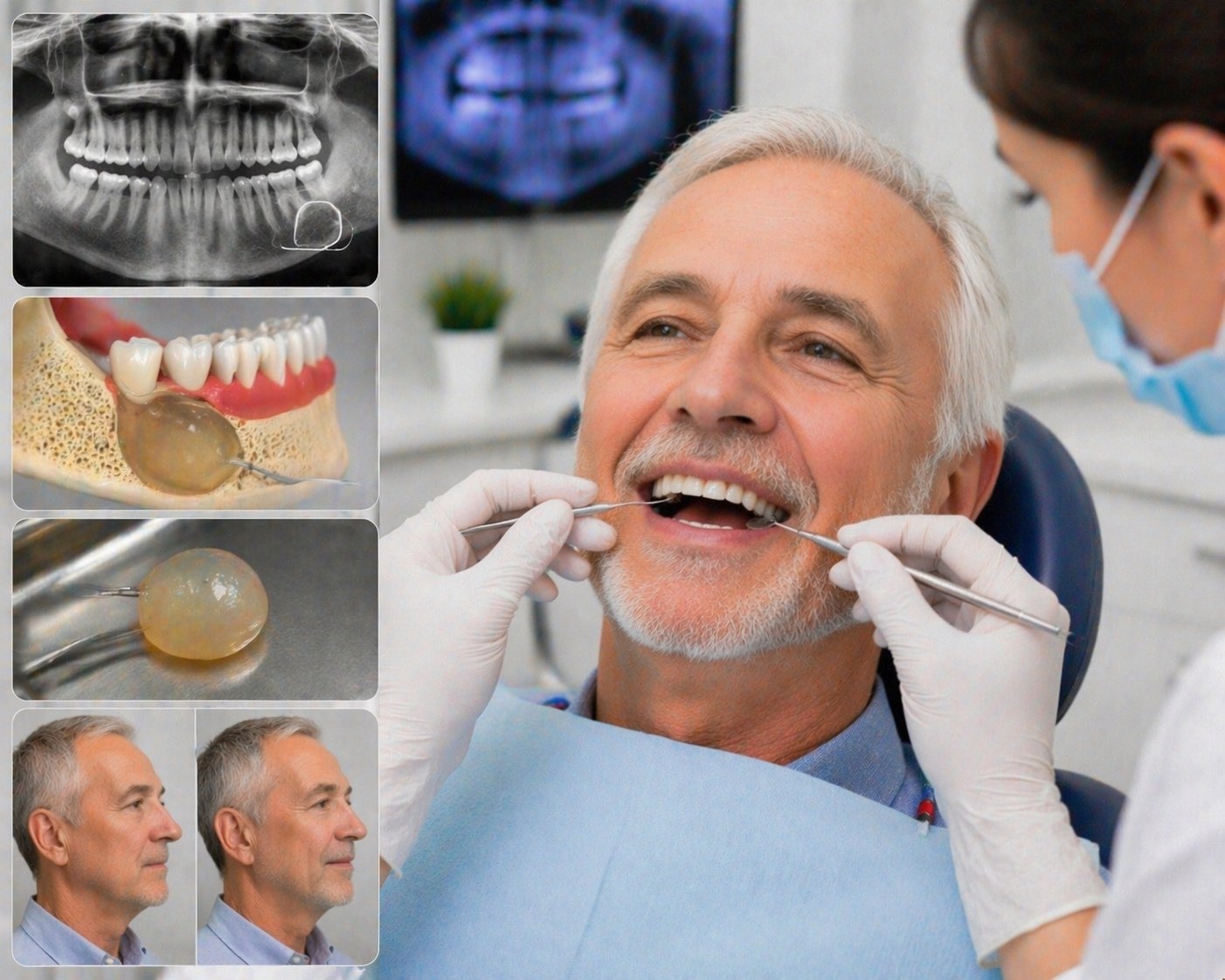
The Surgical Process: Step by Step 1. Diagnosis and Treatment Planning Accurate diagnosis is the foundation of successful treatment. We use panoramic radiography and, where necessary, cone beam computed tomography (CBCT) to map the cyst's boundaries and its relationship to surrounding structures. A biopsy may be performed to confirm the diagnosis before surgery.
2. Anaesthesia and Preparation Cyst removal is typically performed under local anaesthesia, allowing patients to remain comfortable throughout the procedure. For anxious patients, sedation options can be discussed during the consultation. All procedures take place in our fully equipped, sterile surgical environment.
3. Cyst Removal: Enucleation or Marsupialization The surgical approach depends on the nature and size of the cyst. Smaller cysts are generally removed entirely in a single procedure (enucleation), while larger cysts may benefit from marsupialization — a technique that gradually reduces the cyst by creating an opening for drainage before complete removal. All excised tissue is sent for histopathological analysis to ensure a definitive diagnosis.
4. Recovery and Follow-Up After surgery, patients receive detailed post-operative care instructions along with any necessary prescriptions. Scheduled follow-up appointments allow our team to monitor healing closely. In cases with a higher recurrence potential, a structured long-term monitoring plan is put in place.
Key Benefits of Cyst Surgery
Preservation of bone and teeth: Timely removal limits the damage a growing cyst can cause to adjacent structures. Reduction of infection risk: Eliminating the cystic source breaks the cycle of chronic or recurring oral infections. Accurate pathological diagnosis: Tissue analysis ensures any underlying condition is identified and managed appropriately. Minimally invasive technique: Our experienced surgical team works to achieve the best outcome through the smallest necessary intervention. Ongoing monitoring: Post-treatment follow-up supports long-term oral health and early detection of any recurrence.
Why Choose Dentaline in Nicosia, North Cyprus? Dentaline Dental Clinic combines specialist expertise in oral surgery with an in-house digital dental laboratory and a clinical infrastructure built to international sterilisation standards. Located in the heart of Nicosia, we are well-placed to serve both local patients and those travelling to North Cyprus for dental care as part of health tourism. International patients benefit from multilingual support, streamlined appointment scheduling, and transparent communication at every stage of treatment. Our approach is centred on providing honest clinical guidance, personalised care, and a comfortable experience from first consultation through to final follow-up.
Book Your Consultation If you have been told you may have a jaw cyst, or if recent imaging has raised concerns, do not delay seeking specialist advice. Contact our clinic in Nicosia to arrange an evaluation — we will assess your situation thoroughly and discuss the most appropriate treatment path with you.