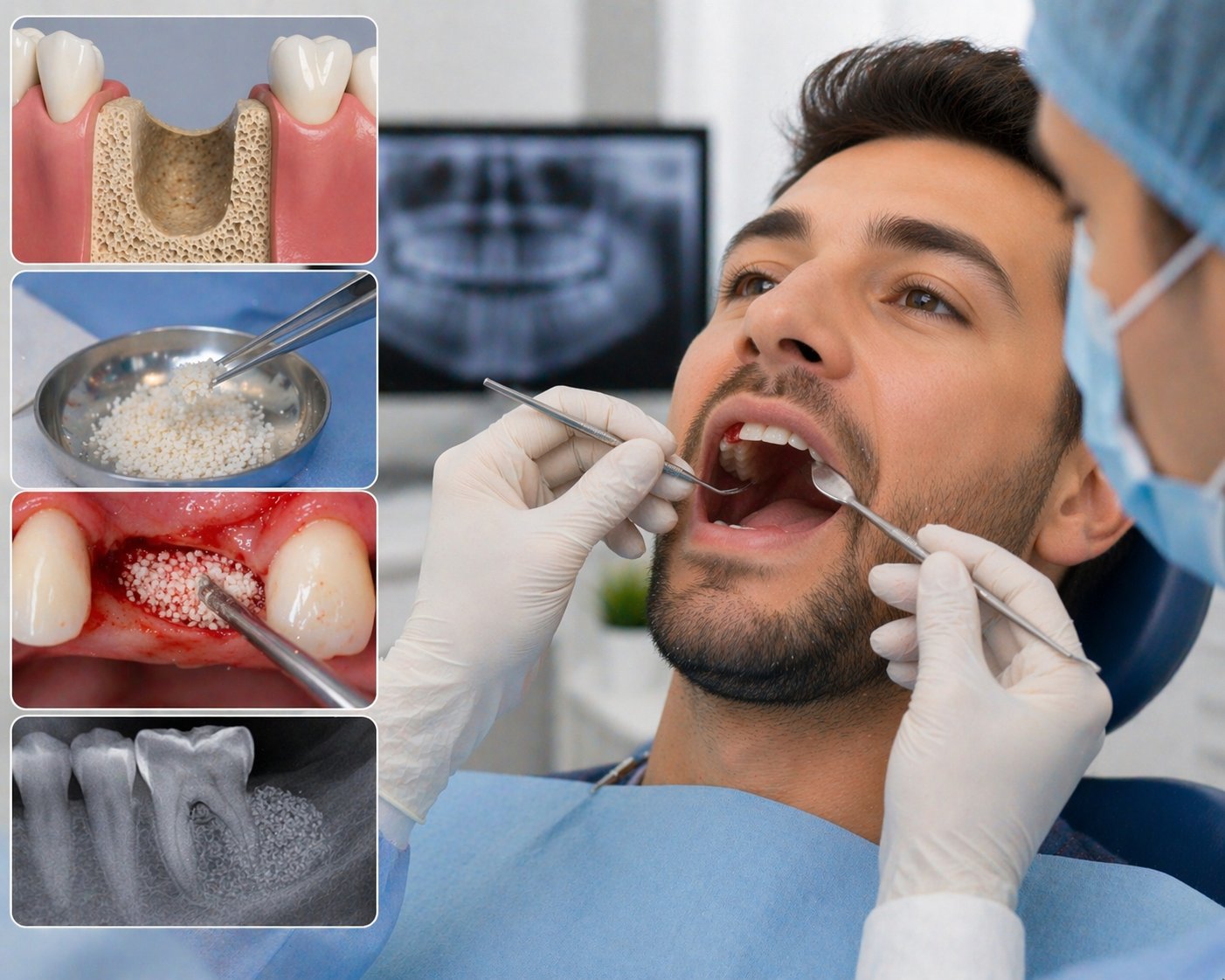
What Is a Bone Graft? A bone graft is a surgical procedure performed to restore volume and density to areas of the jaw where insufficient bone exists prior to implant placement or prosthetic treatment. When a tooth is lost, the surrounding jawbone gradually resorbs and diminishes — a natural process that can make it difficult or impossible to place a dental implant without first rebuilding the foundation. Bone grafting addresses this deficit, creating the structural conditions necessary for successful long-term treatment. At Dentaline Dental Clinic in Nicosia, North Cyprus, bone grafting procedures are carried out by experienced oral surgery specialists and are available to both local patients and international visitors who travel to North Cyprus as part of their dental care journey.
Who Needs a Bone Graft? Bone loss can occur for a variety of reasons, and not every patient requiring implants will need grafting. However, a bone graft is commonly recommended in the following situations:
Significant bone resorption following long-term tooth loss Bone deterioration caused by advanced periodontal (gum) disease Bone defects resulting from tooth extraction, trauma, or infection Congenitally insufficient jawbone structure Upper jaw cases requiring sinus lift augmentation prior to implant placement
Candidacy is assessed through a thorough clinical examination supported by panoramic X-rays and, where indicated, cone beam computed tomography (CBCT) imaging.
The Bone Grafting Process Diagnosis and Planning The process begins with a detailed diagnostic assessment of your jaw structure using digital imaging. Dentaline's in-house digital laboratory allows three-dimensional treatment planning within the clinic itself, enhancing both precision and predictability from the outset. Choosing the Right Graft Material The type of bone graft material is selected based on the clinical picture, the extent of the defect, and patient factors. Options include autografts (bone harvested from the patient's own body), allografts (processed human donor bone), xenografts (biocompatible material of animal origin), and alloplastic (synthetic) substitutes — all of which are well-established in modern evidence-based dentistry. The Surgical Procedure Grafting is performed under local anaesthesia; sedation options are available for patients who require additional comfort. The graft material is carefully placed into the prepared site and secured with a protective membrane that guides bone regeneration. Over the healing period, the body incorporates the graft material, gradually rebuilding a denser, more stable bone structure. Healing and Follow-Up Healing timelines vary depending on the volume of graft placed and individual health factors, but typically span several months. Regular follow-up appointments allow the clinical team to monitor progress and determine the appropriate timing for implant placement once osseointegration is sufficiently advanced.
Benefits of Bone Grafting
Establishes an adequate, stable bone foundation for dental implants Helps preserve facial contours and prevents further bone loss Expands treatment eligibility for patients who were previously considered unsuitable for implants Supports long-term implant stability and function Uses biocompatible, evidence-backed materials for safe and predictable outcomes
Why Choose Dentaline in North Cyprus? Dentaline Dental Clinic, based in Nicosia, stands out among dental practices in North Cyprus for its specialist expertise in oral surgery, implantology, and regenerative procedures. The clinic's integrated digital laboratory means that imaging, planning, and treatment are coordinated under one roof — reducing the number of appointments required and improving continuity of care. North Cyprus has established itself as a respected destination for dental health tourism, attracting patients from across Europe and beyond. Dentaline supports international patients with treatment coordination assistance, multilingual communication, and guidance on local accommodation — making the experience as straightforward as possible. All materials used meet international quality and biocompatibility standards. Sterilisation and infection control protocols are strictly maintained, and every treatment plan is tailored to the individual patient's clinical needs and long-term goals.
Book a Consultation If you would like to find out whether a bone graft is part of your treatment pathway — or if you simply want to explore your implant options in Nicosia or North Cyprus — the Dentaline team is ready to help. Contact us to schedule a consultation and take the first step towards a stable, healthy smile.